Microservices vs Monolith: choosing in 2026
Microservices vs Monolith: choosing in 2026
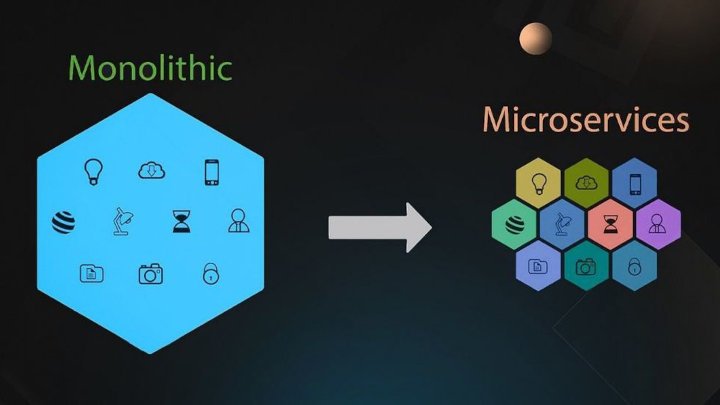
The software industry is going through a reckoning. After a decade of promoting microservices as the default architecture, data shows a stark reality: 42%% of organizations that adopted microservices are consolidating their services, and 90%% of microservices teams still batch-deploy like monoliths, achieving maximum complexity with minimum benefit.
This article honestly analyzes when to choose each architecture, based on real data rather than conference talks.
The microservices tax: an underestimated cost
A case study published in March 2026 perfectly illustrates the problem. An 8-developer team migrated from monolith to microservices in 2023, then moved back to monolith in 2026.
The numbers
Monolith (2023):
- Infrastructure cost: ,200/month
- Servers: 3 (app, database, Redis)
- Deploys: 15 minutes
- Production bugs: ~12/month
- Developer satisfaction: 7/10
Microservices (2024-2025):
- Infrastructure cost: 2,000/month
- Services: 12 microservices
- Kubernetes clusters: 2 (staging + prod)
- API Gateway: Kong
- Deploys: 45 minutes
- Production bugs: ~47/month
- Developer satisfaction: 3/10
Back to monolith (2026):
- Infrastructure cost: ,800/month
- Servers: 4
- Deploys: 8 minutes
- Production bugs: ~8/month
- Developer satisfaction: 9/10
Total: 33,600 wasted annually for worse results.
Why costs explode
Microservices costs go far beyond infrastructure:
- Infrastructure: Kubernetes, service mesh, API gateway, load balancing
- Observability: distributed tracing, aggregated logging, multi-service monitoring (3-5x monolith costs)
- Development: 25%% additional resources due to operational complexity
- Training: 6-12 month DevOps learning curve
- Debugging: cross-service bugs take 3-5x longer to resolve
When microservices actually work
Microservices are not bad. They are over-applied. Here are the real conditions that justify adoption:
You NEED microservices if:
- 100+ developer team with real coordination problems
- Actual massive scale (Netflix, Uber, Amazon)
- Different scaling needs per component (analytics vs real-time)
- Dedicated DevOps/SRE team (5+ people minimum)
- 00K+/month infrastructure budget
- Critical failure isolation requirements
You DON’T NEED microservices if:
- Team under 20 developers
- Deployment problems are technical, not organizational
- Uniform scaling needs
- No dedicated platform team
- Tightly coupled business domains
The key question
The real question is not “are microservices more modern?” but “do your teams block each other during deployments?” If yes, microservices can help. If not, they will add complexity without solving your real problems.
The modular monolith: best of both worlds
The industry rediscovers a pragmatic solution: the modular monolith. A single deployment unit with clear module boundaries defined by business domains.
Principles
Advantages
- Simple deployment: one unit, one pipeline
- Easy debugging: local stack traces, no distributed tracing needed
- Simple refactoring: IDE can navigate all code
- ACID transactions: no distributed consistency issues
- Performance: no inter-service network latency
- Cost: 10-20x lower than microservices
How to migrate to microservices (when necessary)
The Strangler Fig pattern enables gradual extraction:
- Identify a clear bounded context with different scaling needs
- Create an API between the module and the rest of the monolith
- Extract the module as an independent service
- Validate benefits before extracting the next one
Amazon Prime Video demonstrated the impact: consolidating a critical service reduced costs by 90%%.
Cost comparison
Total cost of ownership over 3 years (10-developer team)
| Item | Monolith | Microservices | Modular Monolith |
|---|---|---|---|
| Monthly infrastructure | K-5K | 0K-80K | .5K-6K |
| Initial setup | 2-4 weeks | 3-6 months | 3-6 weeks |
| Monitoring/observability | Basic | 3-5x cost | 1.5x cost |
| Team training | Minimal | 6-12 months | 1-2 months |
| Prod debug time | Fast | 3-5x slower | Fast |
| Deployment | Simple | Complex | Simple |
| Total 3yr cost | ~00K | ~M+ | ~50K |
Decision framework
Choose the monolith if:
- Team under 20 developers
- Traffic under 10K req/s
- Uniform scaling needs
- Time-to-market priority
- Limited DevOps expertise
- Simple, well-defined business domain
Choose the modular monolith if:
- Team of 10-50 developers
- Identifiable but coupled business domains
- Need structure without operational complexity
- Want to keep microservices option open for later
Choose microservices if:
- Team over 50 developers
- Proven different scaling per component
- Dedicated platform team
- Clearly separated business domains with minimal cross-dependencies
- Justified infrastructure budget
Why companies make the wrong choice
The honest reason most companies use microservices: it looks good on a resume. Engineers want to say “I built microservices at scale.”
But are you actually at scale? Instagram has 2 billion users. If you are not Instagram, you probably do not need Instagram’s architecture.
Signs you need to consolidate
If you are already in microservices, these signs indicate over-splitting:
- Services that always deploy together
- Simple changes requiring modifications across 5+ services
- Production bug debugging taking days
- Infrastructure costs growing faster than traffic
- Developers spending more time on infrastructure than product
Conclusion
There is no universally superior architecture. The monolith is not dead: it is often the smartest choice. Microservices are not always overengineering: at scale, they are necessary.
Start simple. Feel the pain. Then solve the real problem.
Successful teams treat architecture as a living decision, not a permanent commitment. Start with a modular monolith. Extract services when organizational pressure makes that separation necessary.
As the Prime Video case showed: sometimes, going backward is the best step forward.