Cross-platform mobile development in 2026
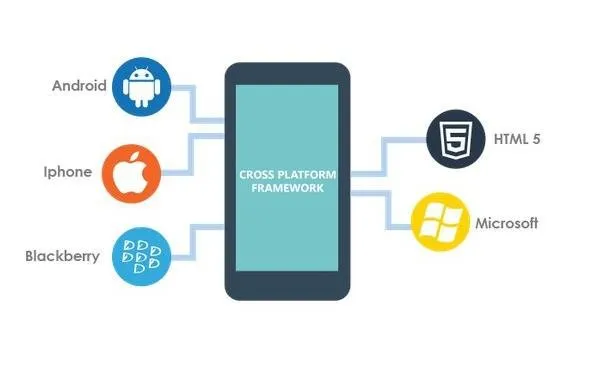
In short: As of September 5, 2026, choose Flutter for a visual product across several targets, React Native to capitalize on React and native views, and .NET MAUI for a C#/.NET team. For a new project with no ecosystem constraint, my recommendation is Flutter. Do not decide from a generic benchmark, though: prototype the most demanding user journey on your target devices.
Which cross-platform mobile framework should you choose in 2026?
Cross-platform development is now a credible option for a durable mobile product. Flutter, React Native, and .NET MAUI nevertheless address different needs. Base your choice on team skills, target platforms, the required level of visual customization, and native dependencies.
Flutter provides its own rendering system and deploys apps to mobile, web, and desktop. React Native describes the interface in JavaScript or TypeScript, then relies on components backed by native mobile views. .NET MAUI offers a shared C# and XAML foundation for Android, iOS, macOS, and Windows.
How do Flutter, React Native, and .NET MAUI differ?
Flutter: controlling rendering across platforms
Flutter, developed by Google with Dart, draws the interface through its own rendering engine. This approach makes a consistent visual identity easier when the application must look the same across several systems.
Impeller is the default engine on iOS and on supported Android versions. It prepares shaders ahead of execution, among other things, so performance is more predictable. On the web, Flutter can compile to WebAssembly, but its own documentation recommends traditional web technologies for text-heavy static content.
Strengths:
- highly customizable and consistent rendering;
- officially supported mobile, web, and desktop targets;
- built-in hot reload;
- a strong choice for animations and bespoke interfaces.
Watch-outs:
- learning Dart if your team does not already know it;
- native appearance must be recreated explicitly when the product requires it;
- packages and platform-specific functions need validation.
React Native: extending React skills
React Native, maintained by Meta, lets you build Android and iOS applications with React. Its core components are backed at runtime by the corresponding native views. A web team accustomed to React therefore keeps its component model while retaining access to device APIs.
The New Architecture has been enabled by default since React Native 0.76. It replaces the historical asynchronous bridge with more direct communication, supports modern React features, and allows native modules to load on demand. This does not automatically make an application fast: code and libraries must use the architecture correctly.
Strengths:
- JavaScript or TypeScript with a familiar React model;
- components backed by native views;
- a vast community ecosystem;
- possible gradual adoption in some existing applications.
Watch-outs:
- Android and iOS remain the main targets of the core project;
- web, Windows, macOS, and other platforms rely on partner or community projects;
- native modules and their upgrades require ongoing attention.
.NET MAUI: staying in the C# ecosystem
.NET MAUI is the natural choice for a team already working with C#, XAML, and Microsoft tooling. A shared foundation can target Android, iOS, macOS, and Windows, with the option to add platform-specific code.
.NET 10, released in November 2025, is a Long Term Support release announced for three years. That cycle gives organizations a clear framework when they already align their applications with .NET releases.
Strengths:
- code, logic, and interface sharing in C# and XAML;
- access to native APIs when a specific need arises;
- consistent integration with .NET tooling;
- direct Windows support.
Watch-outs:
- no official Linux target in .NET MAUI;
- less attractive for a team without .NET experience;
- controls, libraries, and rendering must be validated on every target system.
Which framework offers the best performance?
A universal table of figures would be misleading. Startup time, memory, smoothness, and package size vary with the framework version, compilation mode, dependencies, device, and tested scenario.
Flutter reduces rendering variation by controlling its own graphics stack. React Native relies on native views, and its New Architecture reduces the cost of some exchanges between JavaScript and native code. .NET MAUI compiles to native platform formats and allows direct calls to their APIs.
To compare the options seriously:
- build the same critical screen with the libraries planned for production;
- measure cold startup, smoothness, memory, and package size;
- test a recent device and the least powerful model you still support;
- also check build time, error diagnosis, and native-module maintenance.
For an application based on forms, lists, and network calls, data architecture and code quality often matter more than the framework itself. For an animation-rich interface, a Flutter prototype deserves a place in the comparison.
Which companies use these frameworks in production?
The official showcases confirm that Flutter and React Native power significant products. Flutter lists applications from Google, Toyota, Nubank, and eBay, among others. The React Native showcase names products from Meta, Microsoft, Amazon, Shopify, and Wix.
These references prove that the frameworks can run at scale, not that they automatically fit your project. A large company can fund native specialists, maintain its own libraries, and adapt a framework to constraints your organization does not share.
For .NET MAUI, assess primarily how well it aligns with your existing .NET assets, tooling, and targets. The organizational benefit may matter more than a popularity ranking.
Which option fits your use case?
Choose Flutter if:
- the visual identity must remain consistent across platforms;
- animations and custom components are central;
- you also target the web or desktop;
- the team is willing to adopt Dart.
Choose React Native if:
- the team already knows React and TypeScript;
- the application primarily targets Android and iOS;
- you want components backed by native views;
- your dependencies are compatible with the New Architecture.
Choose .NET MAUI if:
- your organization already uses C#, .NET, and Visual Studio;
- Windows is one of the main targets;
- the application integrates with an existing Microsoft estate;
- you want support aligned with the .NET release cycle.
Is Kotlin Multiplatform a credible alternative?
Kotlin Multiplatform has been stable for production code sharing since JetBrains’ 2023 announcement. Its approach is different: you choose how much logic to share and can keep Android- and iOS-specific interfaces.
This option is particularly relevant for an Android team that knows Kotlin, wants to share the domain and data access, but remains committed to a native experience. In return, it requires maintaining skills and tooling for the platforms involved.
Kotlin Multiplatform therefore does not remove the choice between shared and native interfaces. It makes that sharing more progressive.
Which trends actually matter?
Code sharing is becoming more modular
Teams no longer always try to share the whole application. They can share business logic, data, or selected components, then keep native code where it makes a visible difference.
Web and desktop remain distinct targets
Flutter officially supports those environments. React Native addresses them through projects outside the Android and iOS core. .NET MAUI covers Windows and macOS desktops, but not Linux or the web. Check the maturity of each target instead of trusting the term “cross-platform” alone.
Performance must be decided on the real product
Modern architectures reduce some technical costs, but they do not fix a poorly virtualized list, oversized images, or badly designed network calls. Coding assistants can speed up development; they do not replace profiling on a real device.
Conclusion
In 2026, Flutter is my default recommendation for a new, highly visual product spanning several platforms. React Native becomes the best choice when the team already has strong React experience and primarily targets Android and iOS. .NET MAUI is coherent for a C# organization that also targets Windows.
Do not choose based on market share or an isolated benchmark. Select two candidates compatible with your skills, prototype the riskiest user journey, then measure performance and maintenance cost. This short test provides a more reliable answer than a generic ranking.
Sources
- Flutter — supported deployment platforms
- Flutter — Impeller rendering engine
- Flutter — web and WebAssembly support
- React Native — New Architecture overview
- React Native — partner and community platforms
- Microsoft Learn — what .NET MAUI is
- Microsoft — .NET 10 announcement
- JetBrains — Kotlin Multiplatform is production-ready
- Flutter — apps in production
- React Native — apps in production
Frequently asked questions
Flutter or React Native in 2026?
Choose Flutter when you want precise control over rendering and also plan to target the web or desktop. Choose React Native when your team already knows React and prefers components backed by native iOS and Android views.
Which cross-platform mobile framework delivers the best performance?
No framework wins every scenario. Flutter is particularly attractive for highly customized graphical interfaces, while React Native and .NET MAUI provide direct access to native capabilities; measure your critical user journey on the devices you actually target.
Which mobile framework should you choose in 2026?
By default, pick Flutter for a new visual product, React Native for a React team, and .NET MAUI for an organization already equipped with C# and .NET. Kotlin Multiplatform is also worth evaluating if you want to share logic while keeping native interfaces.
Is .NET MAUI suitable for a consumer mobile app?
Yes, but its advantage is clearest for a team already using C#, Visual Studio, and Microsoft services. For a product centered on a highly customized visual identity, compare it with Flutter using a representative prototype.